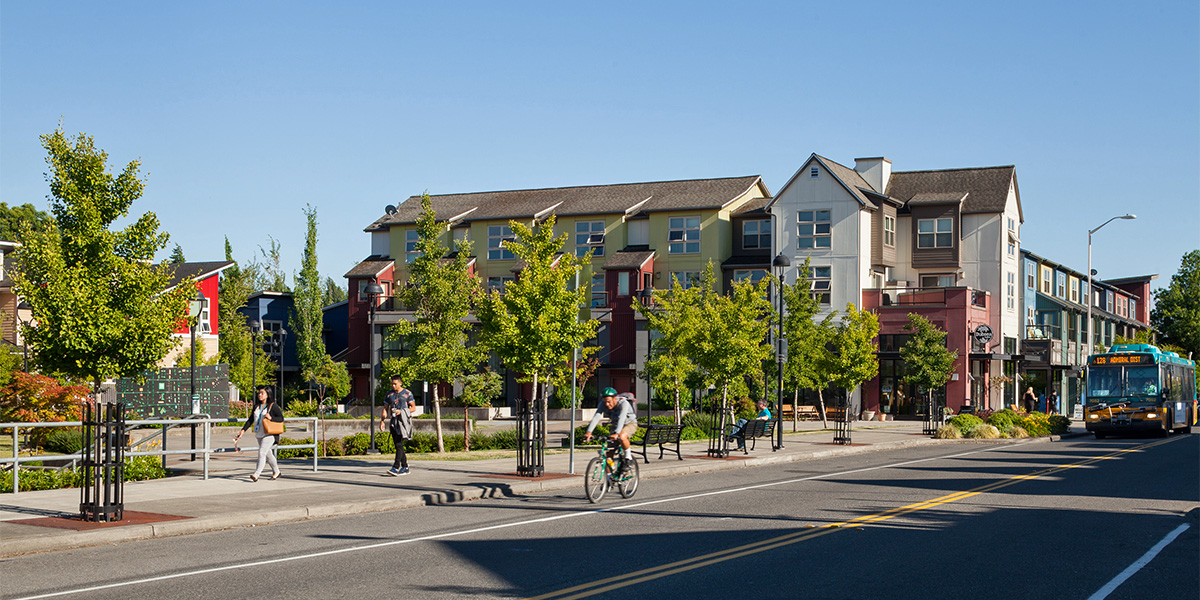
The South King County Housing First Pilot Project

A Narrative Report August 2007

Project Administrator:

Project Funders:

King County Housing Authority

King County Department of Community and Human Services

Report Prepared by:

Debbie Canavan Thiele Homeless Housing Initiatives Director King County Housing Authority debbiet@kcha.org, 206.574.1355

South King County Housing First Pilot Project

The South King County Housing First Pilot Project was developed through a joint initiative of the King County Housing Authority (KCHA), King County’s Department of Community and Human Services, and United Way of King County.

The intent of the program is to successfully house 25 chronically homeless individuals in South King County. The project “bundles” KCHA housing subsidies with County and United Way service dollars in order to fund a nonprofit provider to connect with, house, and maintain housing for hardtoserve, longterm street homeless with multiple disabilities. The pilot is based on a “housing first” approach with “PACT model” supportive services.

The funding partners jointly selected Sound Mental Health (SMH) to administer the project in May 2006. KCHA provided rental subsidies to SMH through a new program design that enabled lump sum payments of Section 8 subsidies to the provider. SMH used these funds, in turn, to master lease apartments from private landlords. KCHA also provided funding for furnishings and security deposits. Support services are funded through a combination of County Mental Health Medicaid tier reimbursements, Access to Recovery dollars, Chemical Dependency reimbursements, and United Way funds.

The first client was housed in November 2006 and by June 2007 all 25 slots were filled. The program has established credibility with both the landlord community and street homeless population in South King County. SMH’s street outreach teams indicate that there is a substantial demand for additional units.

“Christopher” has serious medical issues as a result of having had a huge portion of his large intestine removed a number of years ago. The related challenges he faces have prohibited him from holding a regular job. Christopher managed to get Social Security assistance, but he was never able to pull together the first and last month’s rent and deposit to secure an apartment in South King County. His poor rental history, previous drug and alcohol problems, and prior legal difficulties added to the barriers that kept him from leasing an apartment. As a result, Christopher had been living in the woods by Highline Medical Center in Burien for six years.

On December 21, 2006 a volunteer at a local food bank who knew Christopher heard about the South King County Housing First Pilot Project. The volunteer referred Christopher to Sound Mental Health with hopes that he would qualify. Christopher moved into a furnished apartment on January 2nd, 2007no strings attached.

As one of the first participants in the Housing First Pilot, Christopher feels a responsibility to help others make the transition out of homelessness. He still goes to the food bank, but now he uses the food he receives to prepare meals in his own kitchen. And he shares them with other formerly homeless individuals who live in his apartment complex. Christopher has become a selfappointed welcoming committee and keeps an “open door policy” with other participants of the Housing First Project, allowing them to come in and visit when they need to talk with someone. Christopher has many visitors as a result and is well known and well liked in his new community.

Homeless Individuals Who Live in South King County

Sound Mental Health administers both the South King County Housing First Pilot Project and PATH, an outreach program that provides mental health and chemical dependency services to people who are homeless. There are approximately 150175 individuals like Christopher enrolled in PATH. The outreach team believes that most of these individuals would qualify as chronically homeless, although not all have disabilities that would make them Medicaid eligible. A person is defined as chronically homeless when he or she has a significant disabling condition and has been homeless for one year or longer, or more than four times in the last three years.

Prior to the Housing First Pilot, participants of the program were living in the woods, in and out of the the Catholic Community Services shelter and other church shelters in South County, couch surfing, living “outside,” riding the bus at night, under the bridge by the Renton Library, and camped along the Green River. Participants were homeless for an average of 3.9 years and for as long as 13 years.

A large majority of Housing First participants have had some legal involvement that led to time served in jail or prison. Many have recent or remote felony and/or misdemeanor convictions that preclude them from housing. Most have eviction histories. Two participants have histories of being hospitalized for psychiatric decompensations. One thing most participants have in common is that they led productive lives for a time in the past until circumstances or events occurred that led to their becoming homeless.

“Joe,” who is 19, had moved to Seattle on a whim, eager to get out of a bad family situation back east. Joe said he bought a ticket for the place the farthest away that he could afford for the money he had in his pocket. Joe struggles with serious depression and was diagnosed as bipolar. He had a history of cutting himself and at least one serious suicide attempt. Joe had huge anger management problems and could not hold a job more than three weeks due to his explosive temper with coworkers. In the year and a half since Joe moved to Seattle, he has stayed in shelters off and on and crashed with friends when he could. When the Housing First Program started, Catholic Community Services arranged a meeting between Joe and the Housing First outreach team. The day after that meeting, Joe moved into a furnished apartment.

Outreach and Engagement

Because rental assistance was available to SMH to secure units before participants were enrolled, the turnaround time from participant acceptance to movein was very fast, as in Joe’s case. The program goal was to help people move in within one month of their accepting a unit, but the average was closer to 21 days. However, people living on the streets were initially skeptical about the program and didn’t always say yes when first offered an apartment.

“Don” had been homeless multiple times for several years at a time before he met the SMH team. He didn’t want to accept help because he feared that he’d have to do something in return. Don’s first question was, “Are you going to make me go to rehab?” His second was, “Will I be expected to participate in religious programs?” Even after hearing that the answers to his questions were “no,” he was still wary and said, “I’ll see how the others do, and then maybe…”

Once the cold weather set in, and after having spent more time with SMH staff, Don became a lot more amenable to the idea of a home of his own. He has severe health issues including Emphysema and had a very difficult time getting around due to being chronically inebriated. His coloring was yellowed and pasty. When a unit was ready for him, staff went out and climbed down under the Renton library where he was bundled up, asleep. The team woke him up, helped him pack his belongings, loaded up the truck, and put him in his nice warm apartment. When his case manager handed him his apartment keys, Don teared up and said, “I haven’t had my own keys in 9 years.”

Outreach was also often conducted by other Housing First participants who would go along with the staff team and introduce them to friends they had made while they were homeless. David Stewart, SMH PATH Outreach Worker, says, “now that the Housing First Project is filled, it can get frustrating to engage people without being able to offer them the housing they need and want.”

The Housing

Finding privatemarket rental housing was the biggest challenge for the startup of the Pilot. SMH had a partnership agreement with a property management company for a setaside at a development in South King County at the time that they submitted their qualifications to project funders. Following their award, the property management firm’s staffing changed, and the company was no longer willing to work with the Housing First Program. Over a fourmonth period, SMH built their team and connected with 53 landlords to find a new partner. Many were reluctant to even entertain the notion of working with the homeless population, and others were not an option because of their policies regarding eviction and criminal history.

Finally, the team found the managers at one apartment complex to be amenable, but the manager wanted to start slowly. They were willing to masterlease 510 units to SMH, but wanted to screen participants directly. More than 20 applicants were screened out of the Housing First program because of their criminal histories. The team assured the apartment management staff that they would be actively engaged with the participants on site and on a daily basis; that SMH would provide 247 services to the clients; and that they would respond to any and all concerns that the landlord had. The following graph shows the leasing rampup for the pilot program.

SMH has backed up their promises with action and responded to landlord concerns. When the site manager saw a participant urinating outside of the management office, he called SMH but didn’t take action directly against the participant. The case manager addressed the situation with the participant who denied that it was he who did it. But after the conversation, the behavior stopped. The site manager has expressed his appreciation for these timely responses and the relationship has grown between the team and the property managers. As a result, 21 of the 25 Housing First participants now live in this apartment complex. After all of these participants moved in, the management company for the development changed for the third time. The new company is now none other than the one that originally declined the offer to partner. Fortunately, the firm has continued to employ the property manager who has the relationship with SMH, and the partnership continues to work.

The development has nearly 250 units. Amenities include microwaves, dishwashers, balconies or patios, central air and heat, woodburning fireplaces, swimming pools and fitness center, basketball court, clubhouse, and easy access to freeways and shopping.

Rent and Incomes

In addition to the primary complex, three participants are housed in apartments owned by nonprofit agencies. The average gross rent (rent plus utilities) for all apartments in the Program is $713 per month. Midway through the first year, more than half of the participants are receiving some form of entitlement income and pay an average of $74 per month toward rent and utilities. However, as a result of a 6month disability verification requirement for persons who are chemically dependent, only seven participants are enrolled in Medicaid, three fewer than originally anticipated in the budget model.

Average Gross and Participant Rents

Participant Income Sources

Average

$74

Gross Rent

Average Participant $713

Payment

Source # Participants
GAU 10
0Income 9
SSI 4
TANF 1
Wages 1
Total 25

Transitioning from the Streets

When “Mark” disappeared from his unit after not paying his rent, outreach workers went looking for him. They found him a few days later in a camp. When they asked him why he left, he said he hadn’t paid his rent on time and figured he’d be kicked out so he left before that could happen. The team helped him collect his things and brought him home.

Transitioning from the streets is not an easy adjustment for people who have been in survival mode for many years. One unanticipated result of this is that people who have cooked their meals in tin cans on an open fire for years are still doing so in their fireplaces. Others have slept on their balconies and/or pitched tents in their living rooms. People who have lived in the woods hear the noises in apartment complexes the same way that apartment dwellers hear noises in the woods when they are camping; they are unsettling and make it difficult to sleep. The two women in the program and one of the first men to move in have made their places homier, but few have hung pictures or acquired knickknacks. Kate Huntley, SMH Housing First Project Manager, thinks that folks are just now starting to realize that they are safe and have some permanence in their lives.

Safety

Client safety is hard to monitor in a scatteredsite model. Participants who have been homeless for long periods of time have ties with others in the homeless community. This often means that when one participant moves in, several more come with him or her. Participants with mental illnesses that may keep them from making healthy relationship choices become magnets for people with ill intent. The Housing First staff has encountered this on multiple occasions. The staff would like to have a secured building with an onsite peer counselor or staff person available to participants because it has been difficult to monitor the comings and goings of visitors, and several clients have been assaulted as a result.

Additionally, case managers would like to see a larger staff team to ensure that home visits are conducted by at least two people. The staff often encounters the same dangers that their clients are experiencing when they are visiting participants in their homes.

The Services

Staffing

The Pilot uses a modified “PACT” service model, a Program for Assertive Community Treatment. The perperson budget for services is $13,183. Employing team members from different fields of focus such as mental health, nursing, chemical dependency, housing case management, and peer support has enabled the team to very effectively wrap services around these 25 participants.

Specifically, it has been helpful to have medical staff available to consult with because many clients have medical needs. Having a team working with clients is important as this is oftentimes a population that is slow to trust and is accustomed to using manipulation in order to get what they want. The PACT model gives staff the ability to get to know each client well by noting how they interact with each team member. The biggest benefit of the model is the ability to work with clients in their homes and see how they operate in their environment. Clients seem to open up a great deal while in the comfort of their own homes. Low caseloads mean that clients can always reach a care provider when they have an urgent need.

Kathryn Kite, Housing First Case Manager

The staff team is dedicated to the Housing First model, but has at times had to work to accept the fact that services are not mandatory. There is only so much case managers are able to do to cajole cooperation from participants, especially those in need of treatment. A few refuse anything that is offered in the way of treatment. Others will do little to cooperate with the case manager to get it done and yet complain that they are not getting the services that they need.

Treatment

Helping participants enroll in treatment has been frustrating for staff. One participant waited more than 6 weeks to get admitted into treatment. The window of willingness to checkin is often very small, so delays in access can result in missed opportunities. One participant got into detox, but was discharged because the treatment staff said he was too intoxicated and unresponsive to work with.

Services in Housing

Housing First team members are in clients’ homes daily and help with a long list of activities in addition to counseling and group therapy. Just a few are listed below:

Advocate for access to food,

Negotiate with DSHS. benefits, and medical care. Work with landlords and

Clean apartments; put furniture utility companies.

together.

Help with money Contact family members. management and job seeking.

Contact attorneys, assist in

Chase away drug dealers legal matters, and go to court. and prostitutes.

Purchase and transport things

Try to eliminate student loans. that don’t fit on the bus. Purchase and manage

Make flyers for lost pets. medication.

Healthcare

Thanks to a partnership with Healthcare for the Homeless, SMH has developed an excellent relationship with the Kent Community Health Clinic. The team has a direct line into the clinic to get appointments for Housing First participants, which, for homeless people, is unprecedented in South King County. The team nurse goes to clinic appointments with participants, provides patient triage and education, and trains other staff about healthcare and medication monitoring.

“Frank,” a participant in his 60’s, suffered many heart attacks while living on the streets. When he moved into the Housing First Project, the team nurse immediately began working to get him the heart medication he needed. Unfortunately, he did eventually have another heart attack. But this time, his neighbor, Christopher, came to visit him shortly thereafter and called 911. Frank was admitted to the hospital, treated, and discharged to return home. His doctors at the hospital said that if he had not been housed, taking medication, and attended to quickly, Frank would likely not have survived this heart attack.

Retention

Only one participant has left the program to date. This gentleman had a severe alcohol problem and was completely incontinent. His apartment and clothes were constantly covered in bodily filth, and he was so intoxicated that he couldn’t remember to use medication or proper undergarments. He would black out and when he regained consciousness, he (and/or staff) would find people in his apartment that he did not know, and who were up to no good. The staff felt that a program with onsite services might be a better fit for him and tried to get him into a Seattle housing first project, but they were told that he wasn’t a highenough utilizer of services. Case managers worked very hard to get this participant into treatment. Unfortunately, he decided to leave detox just prior to getting a treatment bed, and at that time said that he no longer wanted any kind of assistance. The Housing First and PATH team are still unable to find him.

Other participants have been on the verge of eviction. One participant would become intoxicated and play his stereo very loudly at night. Several complaints were lodged with management. SMH addressed the issue on several occasions with the participant, without success. Finally, with the participant’s permission, his case manager took his stereo out of the apartment. The problem is now solved.

Moving Forward

There are challenges in the development of a program of this nature, but overall, participants are getting healthier. They are receiving much needed mental health and medical treatment. They are reducing the use of drugs to self medicate, and some are seeking treatment and support for their drug addictions. They are thinking about their use of alcohol and talking about quitting or reducing consumption. For example, Don is seriously contemplating cutting down his drinking and cigarette smoking, with an aim toward improving his health some.

Joe, who had a hard time getting along with coworkers, really wanted to work. After stabilizing in housing and on medication, he and his case manager came up with an employment plan that would allow him to stay on his benefits and ease back into work. He is now working full time with a large company, the first participant to become employed. He works night shift, which allows him to work independently without the agitation of a lot of coworkers. Joe is happy with his job and his outbursts have waned. He wants to make it on his ownto save for a deposit and pay the full rent on an apartment to make room for another Housing First participant.

Participants are feeling cared for, and they are starting to feel comfortable in their homes. “I think one of the best reasons to expand the South King County Housing First Project is that we are able to provide others living in the hopelessness of homelessness with the experience of being cared about and treated as people again.” Kate Huntley, SMH Housing First Program Manager